UVA vs. UVB Rays: Understanding the Difference and Their Impact on Your Skin
UVA is associated with photoageing and pigmentation; UVB with sunburn and direct DNA damage. Understanding both is the basis of daily sun protection.
1. UVA Rays (Ultraviolet A) — “Aging Rays”
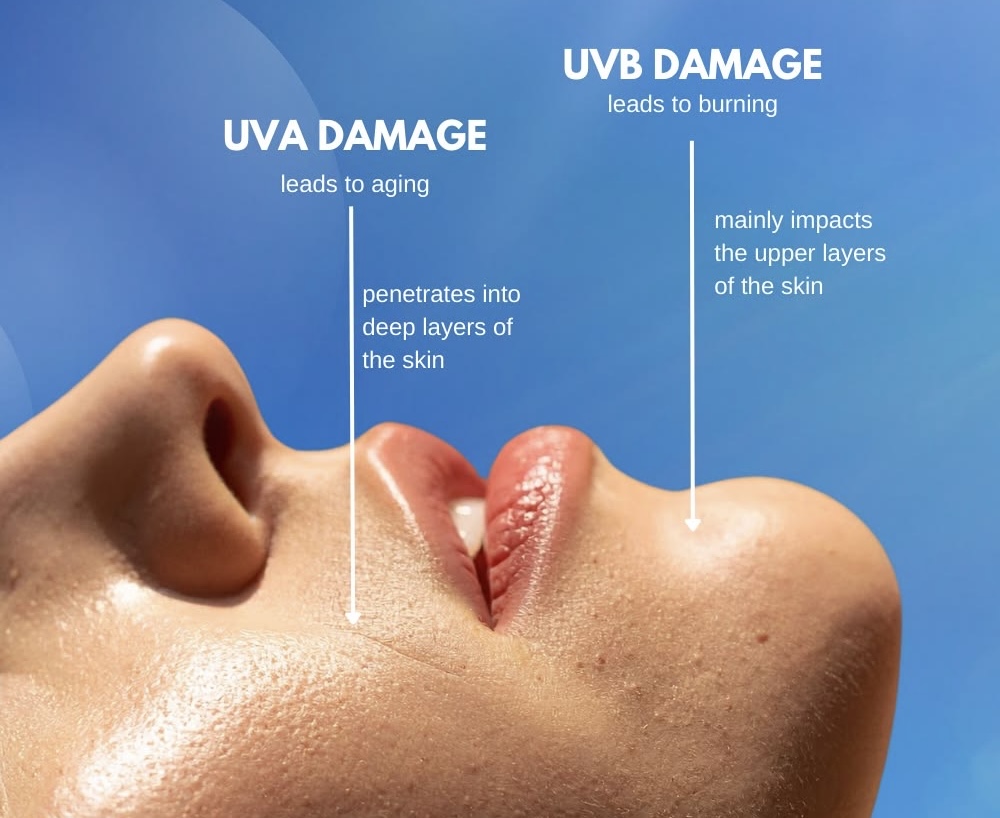
Definition: Long-wave ultraviolet rays that make up about 95% of the UV radiation reaching the Earth’s surface. They are present with relatively equal intensity during all daylight hours throughout the year and can penetrate through glass and clouds.
Skin impact:
- Deep penetration: penetrates deep into the thickest layer of the skin (the dermis).
- Premature aging: destroys collagen and elastin, leading to premature aging, fine lines, and wrinkles.
- Hyperpigmentation: triggers sunspots, age spots, and uneven skin tone.
- Indirect DNA damage: contributes to long-term skin damage and increases the risk of skin cancer.
Quick memory trick: UVA = Aging.
2. UVB Rays (Ultraviolet B) — “Burning Rays”
Definition: Medium-wave ultraviolet rays that account for about 5% of UV radiation reaching Earth. Their intensity varies depending on time, season, and location, with the strongest exposure generally occurring between 10 AM and 4 PM. They cannot penetrate glass.
Skin impact:
- Surface penetration: directly targets the outermost layer of the skin (the epidermis).
- Sunburns: primary cause of red, painful sunburns and skin inflammation.
- Direct DNA damage: causes direct damage to cellular DNA and contributes to the development of skin cancers, including melanoma.
- Tanning: stimulates melanin production, causing the skin to darken or tan.
Key takeaway
UVA is mainly associated with photoaging and pigmentation, while UVB is primarily responsible for sunburn and direct UV-related DNA damage.
Both UVA and UVB matter when it comes to daily sun protection.
The Journal
Sand Touch SPF 50+
Broad-spectrum protection in a hydrating base, designed for daily wear in regional light.